Bulk GPU and Graphics Card Supplier
We supply graphics processing hardware in volume, from workstation cards through to data center accelerators. This is the fastest moving category we handle and availability changes weekly, so quotes are issued against live stock rather than a static list. Every card is tested and graded before it ships.
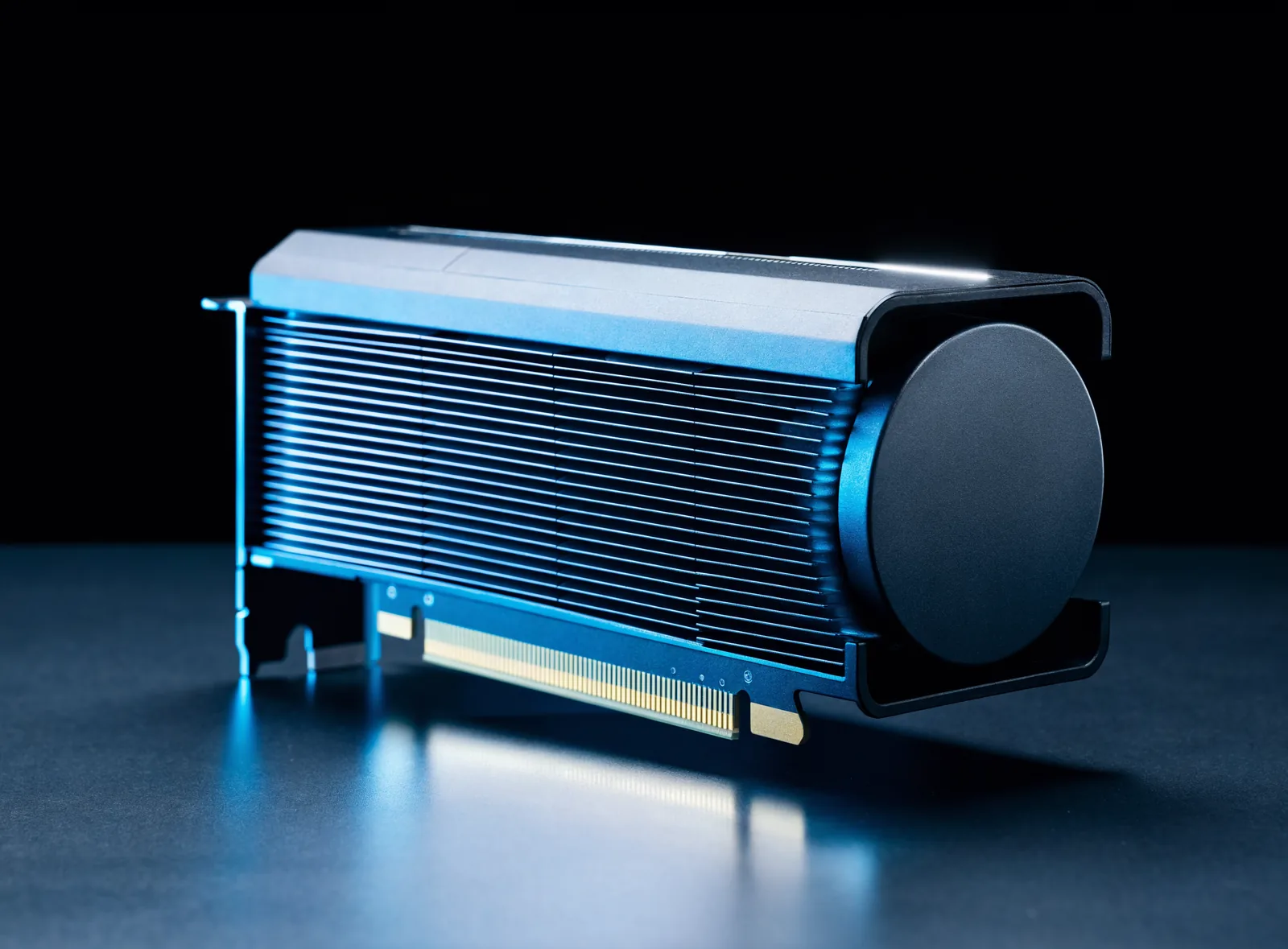
Specifications
What we hold in GPUs.
- Classes
- Data center, workstation, desktop
- Form factors
- Full height, low profile, passive
- Cooling
- Active blower, passive, axial
- Conditions
- New, refurbished, tested pulls
- Typical volume
- 10 to 1,000+ units
- Identification
- Quoted by exact part number
Typical stock
Commonly available.
- Passively cooled data center accelerators
- Workstation graphics cards in volume
- Desktop graphics cards by the lot
- Cards pulled from decommissioned compute nodes
- Mixed lots with full manifests
Looking for a specific part number?
Send the part number and quantity. We quote against live stock, and if we cannot get it we will say so rather than substitute something else.
Clearing GPUs rather than buying? Sell your surplus GPUs to GTR Supply. That page sets out what we take, what your list needs to carry for GPUs, and what moves the number up or down.
In circulation
GPUs makes, models and part numbers.
GPU lots reaching the enterprise secondary market come from three distinct places, and the families below are grouped by which one. AI and HPC cluster refreshes release data center accelerators, which split hard between PCIe cards anyone can rack and SXM modules that are worth little without the baseboard they bolt onto. Enterprise and hosting refreshes release the general purpose full height passive cards and the single slot low profile inference cards that fill dense and edge servers.
None of this is a stock list
The families below are what circulates in this category on the secondary market, listed so you can work out what you are holding or what you need. None of it is a stock listing and nothing here says GTR Supply holds a particular part. The photographs illustrate the form factor and are not photographs of any named product. Send the part number and the quantity you need and we will tell you where we stand.

Nvidia Tesla P40, P100 and V100
Nvidia
The Pascal and Volta data center generation, full length dual slot cards with no fan of their own. They come out of HPC installations and early AI clusters in batches, and they still carry more of the secondary volume than the current flagship parts do.
- How to spot it
- Nvidia part numbers run 900-2G610 for the P40, 900-2H400 for the P100 and 900-2G500 for the V100 PCIe card. The sticker sits on the card body, and OEM versions carry a Dell or HPE suffix.

Nvidia SXM modules and HGX baseboards
Nvidia
Mezzanine modules that bolt onto a baseboard rather than into a slot, mounted four or eight at a time and linked directly to each other. They arrive from whole AI systems being cleared, and a module separated from its baseboard cannot go into an ordinary server.
- How to spot it
- No PCIe edge connector anywhere on the module, which is the giveaway. Generations read SXM2, SXM4 and SXM5. Baseboard assemblies carry a 935 prefix part number, such as 935-24287 for an eight module Hopper board.

Nvidia A100 and H100 PCIe
Nvidia
The double width passive flagship cards, carrying stacked high bandwidth memory rather than GDDR. They reach the secondary market when a cluster is refreshed or an operator rotates a generation out, and they change hands in batches rather than as single units.
- How to spot it
- These two broke the older numbering. The A100 PCIe reads 900-21001 and the H100 PCIe reads 900-21010, not the 900-2G pattern used by earlier cards. Capacity and the CEC variant sit in the trailing digits.

Nvidia A10, A16, A30, A40 and L40S
Nvidia
Full height dual slot passive cards built for general rack servers, covering virtual desktop, rendering and inference work. They come out of enterprise and hosting refreshes, and unlike the flagship parts most of them carry display outputs on the bracket.
- How to spot it
- The A40 and the L40S share the 900-2G133 board prefix and both hold 48GB, so the model name on the sticker is what separates them. The A16 is recognisable on sight because it carries four separate GPUs on one board.

Nvidia T4, A2 and L4
Nvidia
Single slot low profile cards drawing all their power through the slot, with no supplementary connector at all. Three generations of the same shape. They fill dense and edge servers in large numbers, so they surface in bulk when those fleets are cleared.
- How to spot it
- The T4 reads 900-2G183, the A2 reads 900-2G179 and the L4 reads 900-2G193. The last digits say which bracket was fitted, so a low profile card and a full height card can differ only in that field.

Nvidia RTX A series and RTX Ada workstation cards
Nvidia
The professional desktop line, blower cooled so several can sit in one workstation, with display outputs and ECC memory. They come from engineering, design and media fleet refreshes, and older generations stay in demand long after retail channels drop them.
- How to spot it
- Part numbers begin 900-5G, for example 900-5G190 for the RTX A4000, 900-5G132 for the A5000 and 900-5G133 for the A6000. The line was named Quadro, then RTX A, then RTX with the architecture after the number.

Nvidia Quadro P400, P620, T400 and T1000
Nvidia
The small half height cards fitted to office desktops and small form factor machines to drive several monitors. They turn up by the hundred in corporate fleet refreshes, usually still inside the chassis, and they are the most common card in a desktop lot.
- How to spot it
- Half height, single slot, with a compact heatsink and one small fan, and mini DisplayPort sockets rather than full size ones. Names are short and unprefixed: P400, P620, P1000, then T400, T600 and T1000.

AMD Instinct MI25, MI50, MI100 and MI210
AMD
AMD's data center accelerators, passive dual slot cards carrying stacked high bandwidth memory. They reach the market from HPC installations and research clusters rather than from mainstream enterprise, so they move in smaller and more concentrated batches than the Nvidia equivalents.
- How to spot it
- AMD numbers the board rather than the product, so the label reads as a 102 prefix string, for example 102D1631410 on an MI50. The later cards carry an Infinity Fabric bridge connector along the top edge.

AMD Radeon Pro and FirePro
AMD
AMD's professional workstation line, blower cooled single or dual slot cards with mini DisplayPort outputs. They come from CAD and media workstation refreshes in the same lots as the Nvidia professional cards, and the two are frequently mixed together on one pallet.
- How to spot it
- AMD product numbers start 100, for example 100-505826 for a Radeon Pro WX 7100, 100-506085 for a W5700 and 100-506157 for a W6800. Naming ran FirePro, then Radeon Pro WX, then Radeon Pro W.

GeForce and Radeon desktop cards
Nvidia and AMD
Consumer cards moving in bulk rather than singly: axial open air coolers, no ECC memory, and power sockets on the top edge. They come from gaming and workstation clearances, mining farm wind downs and system builder overstock, and they suit rebuild and resale programmes.
- How to spot it
- Named by series rather than part number: GeForce GTX 10 and 16, RTX 20, 30 and 40, and Radeon RX 500, 5000, 6000 and 7000. The sticker on the shroud names the board partner who assembled it, not the chip maker.
Trademarks
All product and company names are the trademarks of their respective owners. GTR Supply is an independent trader with no affiliation to, authorization from, or endorsement by any manufacturer named on this page.
Request a quote
Get pricing on GPUs.
Tell us the specification and volume you need. Most requests are quoted the same business day, against a full manifest so you can price accurately.
Common questions
GPUs questions, answered.
How quickly does GPU availability change?
Weekly, and sometimes within a day. GPUs are the fastest moving category we handle, which is why we quote against live stock rather than a published list.
There are two reasons it moves. Supply arrives in bursts, because accelerators come out of compute refreshes in large batches at unpredictable intervals rather than as a steady trickle. Demand for those same parts is intense and largely driven by AI buildouts, so when a batch does land it does not sit around.
The practical consequence is that a GPU quote has a short shelf life. If you are working from a number we gave you several weeks ago, ask us to confirm it rather than assuming it still stands, because it may have moved in either direction.
If you have a standing requirement, tell us and we will come to you when the right stock appears.
Are the cards tested?
Yes. Every card is bench tested and graded before it ships, and the grade is stated on the manifest.
Testing a graphics card means more than confirming it is detected. A card can enumerate on the bus, report its full specification to the operating system and still fail once it is under sustained load, which is the condition that matters if the card is going into compute work rather than onto a desktop. Thermal behaviour is part of that, because a card with degraded thermal paste or a worn fan will throttle or shut down under exactly the workload you bought it for.
Physical condition is recorded as well, since bent brackets, damaged PCIe fingers and missing power connector shrouds all affect whether a card can actually be installed in your chassis. All of it goes on the manifest.
Can you supply passively cooled data center cards?
Yes, and we would rather ask about your chassis before you buy one.
Passively cooled accelerators have no fan of their own. They are designed to sit in a server that pushes a specific volume of air across the heatsink, and the card depends entirely on the host to do it. Put the same card in a workstation, a tower, or a rack server whose fan profile does not recognise it, and it will overheat and throttle or shut down, even though nothing about the card is faulty.
Some server platforms also require a particular firmware level or fan policy before they will ramp cooling for a GPU at all, which means an otherwise correct card can fail in a chassis it is nominally supported in.
Send the exact server model the cards are going into and we will flag the problem before it becomes yours.
Do you sell single cards?
We are set up for volume, so small quantities are usually not where we are competitive. Our pricing comes from buying whole lots, and that advantage disappears on a single unit.
We would rather tell you that plainly than quote a number that wastes your time. For one or two cards you will often do better through a retail channel or a marketplace seller, and we will say so.
Where it is still worth asking is if the card is unusual. Data centre accelerators and older workstation parts that retail channels no longer carry sometimes surface only through decommissions, and in that case we may be the more sensible route even at low quantity.
Send the part number and the quantity either way. If we are not the right supplier, you will get a straight answer rather than a sales pitch.
Guides
Buying GPUs by the lot is a different exercise from buying one unit at a time. These cover the questions that come up before a price is worth discussing.
Brands
Nobody buys or sells GPUs well without knowing exactly which generation and configuration is in front of them, and the number that tells you sits somewhere different on every manufacturer's hardware. These pages show where to look and how to read what you find. They are identification help rather than stock lists, so send the part number and the quantity and we will tell you where we stand.
Every brand GTR Supply buys and sells, grouped by category, with the identification detail for each one.
Other categories
Servers
Rackmount servers, nodes and configured systems, ready to deploy.
Storage Arrays
SAN and NAS arrays, JBOD enclosures and disk shelves, populated or empty.
Networking
Switches, NICs, transceivers and rack infrastructure from the leading brands.
Laptops & Desktops
Business grade systems, graded A and B, supplied in volume.
Let's talk hardware.
Tell us what you are buying or selling. We will get you a number fast.
Prefer WhatsApp? Message us on (945) 397-7765